Uganda, famously known as the Pearl of Africa, is one of the world’s top destinations for primate tourism. Home to more than 20 primate species, the country offers unforgettable encounters with endangered mountain gorillas, intelligent chimpanzees, and a remarkable variety of monkey species. From the misty forests of Bwindi to the lush canopies of Kibale, Uganda provides some of the best primate trekking experiences in Africa.

Whether you’re planning your first safari or returning for another wildlife adventure, this guide will help you discover Uganda’s incredible primates, where to find them, permit costs, and how to enjoy these extraordinary animals responsibly.

Mountain Gorillas

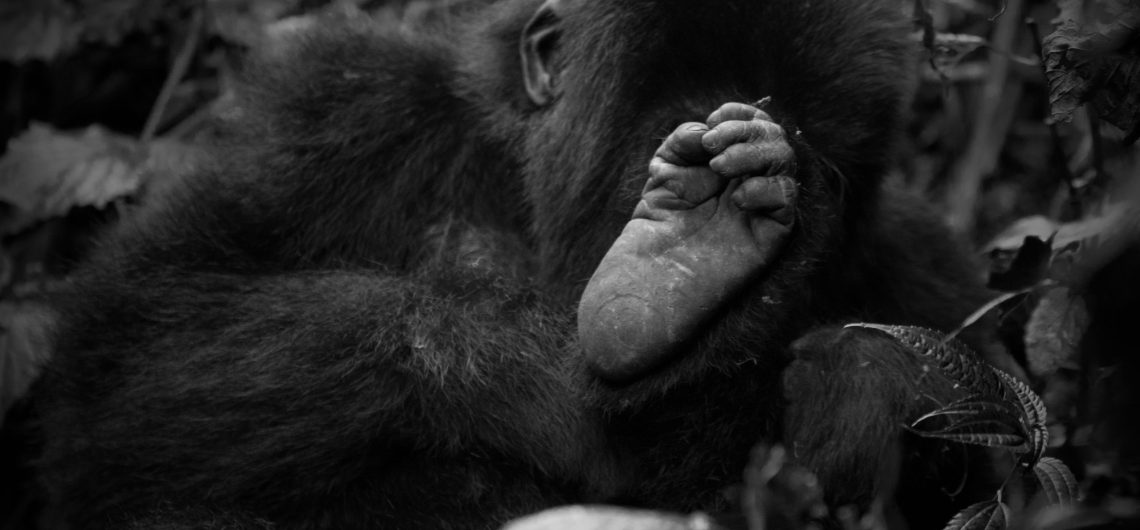
Mountain gorillas are Uganda’s most famous wildlife attraction and one of the world’s most endangered primates. With nearly half of the world’s remaining mountain gorilla population living in Uganda, the country offers one of the most rewarding wildlife experiences on Earth.

Where to See Mountain Gorillas

  • Bwindi Impenetrable National Park
  • Mgahinga Gorilla National Park

Gorilla trekking takes visitors deep into ancient rainforests where experienced guides lead small groups to habituated gorilla families. Spending one unforgettable hour observing these gentle giants in their natural habitat is truly a once-in-a-lifetime experience.

Gorilla Trekking Permit Costs

Standard Gorilla Trek

  • USD 600 during April, May, and November
  • USD 800 during the rest of the year

Gorilla Habituation Experience

  • USD 1,500 for 2026
  • USD 1,800 for 2027

The Gorilla Habituation Experience allows visitors to spend up to four hours with a semi-habituated gorilla family alongside researchers and rangers.

Interesting Facts About Mountain Gorillas

  • Share approximately 98.7% of their DNA with humans.
  • Live in family groups led by a dominant silverback.
  • Gorilla families may consist of up to 30 members.
  • Feed mainly on leaves, shoots, fruits, and stems.
  • Every gorilla has a unique nose print, just like a human fingerprint.

Chimpanzees

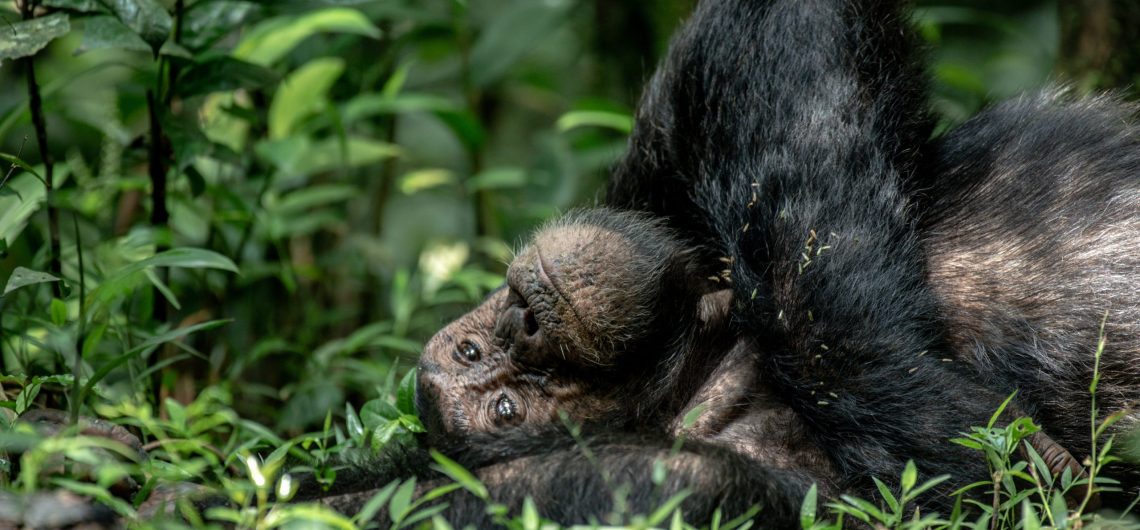
Chimpanzees are among the most intelligent animals on Earth and are known for their complex social behavior, remarkable problem-solving abilities, and close genetic relationship with humans.

Uganda is considered one of Africa’s best destinations for chimpanzee tracking, with thousands of wild chimpanzees living in protected forests.

Where to See Chimpanzees

  • Kibale Forest National Park
  • Budongo Forest Reserve
  • Kalinzu Forest Reserve
  • Kyambura Gorge

Kibale Forest National Park, often referred to as the Primate Capital of the World, boasts the highest concentration of primates in Africa and offers exceptional chimpanzee trekking experiences.

Chimpanzee Permit Costs

Chimpanzee Trekking – Kibale Forest

  • USD 250 for 2026
  • USD 300 for 2027

Chimpanzee Habituation Experience

  • USD 300 for 2026
  • USD 400 for 2027

Kyambura Gorge Chimpanzee Trek

  • USD 100 for 2026
  • USD 200 for 2027

Interesting Facts About Chimpanzees

  • Share approximately 98.8% of their DNA with humans.
  • Use tools to gather food and solve problems.
  • Live in communities of 20 to over 100 individuals.
  • Communicate through vocalizations, facial expressions, and body language.
  • Build new nests in trees every evening for sleeping.

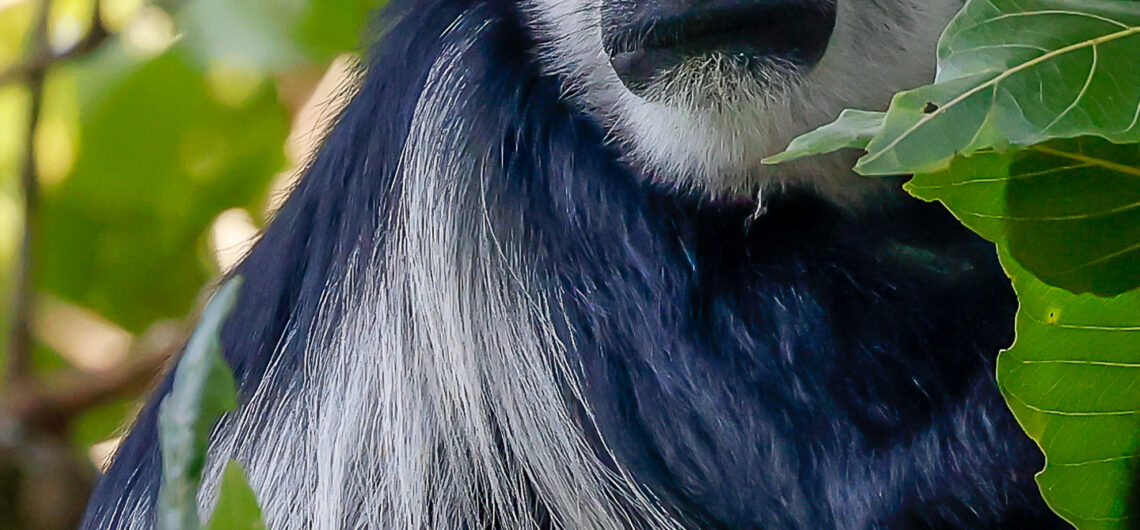
Colobus Monkeys

Colobus monkeys are among Uganda’s most beautiful primates. Their striking black-and-white fur and exceptionally long tails make them easy to recognize as they leap gracefully through the forest canopy.

Where to See Colobus Monkeys

  • Kibale Forest National Park
  • Bwindi Impenetrable National Park
  • Queen Elizabeth National Park
  • Budongo Forest Reserve
  • Bugoma Forest

Interesting Facts About Colobus Monkeys

  • Feed primarily on young leaves.
  • Have specialized stomachs that digest tough vegetation.
  • Spend most of their lives high in the trees.
  • Can leap remarkable distances between branches with ease.

Other Monkey Species Found in Uganda

Uganda is home to many fascinating monkey species that can be spotted during forest walks, game drives, and nature excursions.

Vervet Monkeys

Highly adaptable and commonly seen near safari lodges, camps, and national parks.

Blue Monkeys

Elegant forest monkeys that spend most of their time in the upper canopy feeding on fruits and leaves.

L’Hoest’s Monkeys

A rare and secretive species found mainly in western Uganda’s montane forests.

Red-tailed Monkeys

Recognizable by their distinctive reddish tails, these colorful monkeys are often seen along forest edges and walking trails.

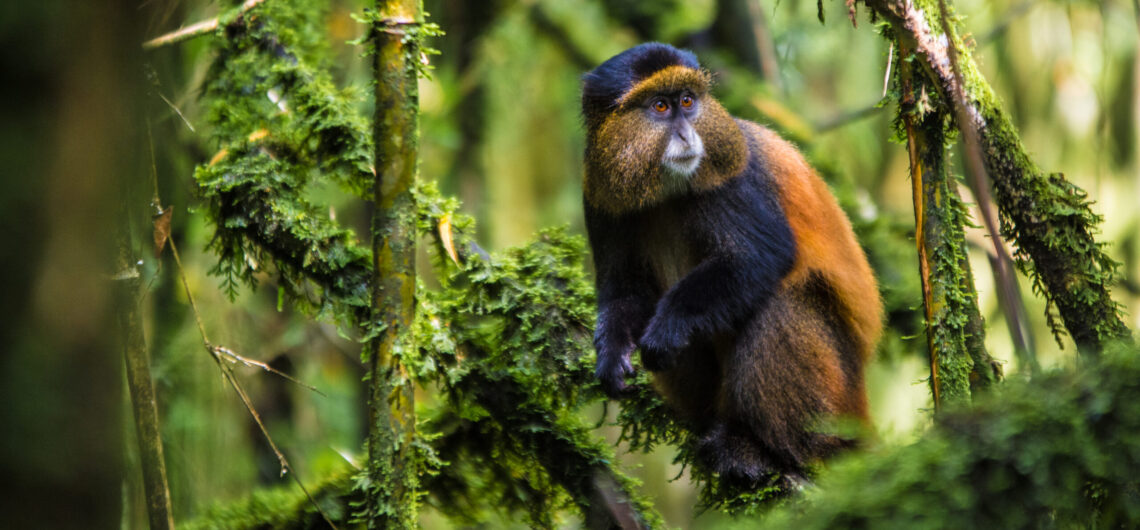
Other primates found in Uganda include olive baboons, grey-cheeked mangabeys, patas monkeys, and golden monkeys, the latter being a major attraction in Mgahinga Gorilla National Park.


Tips for Responsible Primate Trekking

Responsible tourism plays a vital role in protecting Uganda’s endangered primates and their habitats.

To ensure a safe and enjoyable experience:

  • Always trek with an authorized guide.
  • Maintain a minimum distance of 7 meters from gorillas and chimpanzees.
  • Avoid touching or feeding wildlife.
  • Speak quietly and move calmly while observing animals.
  • Follow all park regulations and ranger instructions.
  • Do not trek if you are feeling unwell, as human diseases can easily spread to primates.
  • Carry reusable water bottles and avoid littering in protected areas.

By following these guidelines, visitors help protect these incredible animals for future generations.


Conservation of Uganda’s Primates

Uganda has become a global leader in primate conservation through the combined efforts of the Uganda Wildlife Authority, local communities, conservation organizations, and responsible tourism.

Revenue generated from gorilla and chimpanzee permits directly supports wildlife protection, anti-poaching initiatives, habitat restoration, scientific research, and community development projects.

Choosing a responsible tour operator and respecting wildlife regulations contributes to the long-term survival of Uganda’s endangered primates.


Why Uganda Is Africa’s Best Primate Destination

Few destinations in the world offer the opportunity to encounter such an extraordinary diversity of primates in one country. From trekking endangered mountain gorillas through mist-covered rainforests to tracking wild chimpanzees in Kibale and spotting colorful monkey species across Uganda’s national parks, every experience is unique and unforgettable.

Uganda’s combination of rich biodiversity, experienced guides, well-managed conservation programs, and breathtaking landscapes makes it one of the finest primate safari destinations in Africa.

Whether you’re a wildlife photographer, nature lover, researcher, or first-time safari traveler, Uganda promises memories that will last a lifetime.

Book Your Uganda Primate Safari

Ready to experience the incredible primates of Uganda? Let our experienced safari specialists create a tailor-made itinerary that includes gorilla trekking, chimpanzee tracking, golden monkey encounters, and unforgettable wildlife adventures.

Contact us today to plan your Uganda primate safari and discover why the Pearl of Africa is one of the world’s greatest wildlife destinations.
Kidepo Valley National Park: Uganda’s Remote Wildlife Paradise

Kidepo Valley National Park is one of Africa’s most spectacular yet least-visited safari destinations. Located in the remote northeastern corner of Uganda, this breathtaking national park offers dramatic landscapes, abundant wildlife, and authentic cultural encounters. Its isolation has preserved its natural beauty, making it an ideal destination for travelers seeking an exclusive and unforgettable safari experience.

Whether you are a wildlife enthusiast, birdwatcher, photographer, or adventure traveler, Kidepo Valley National Park promises an extraordinary journey into one of East Africa’s last true wilderness areas.

Wildlife in Kidepo Valley National Park

Kidepo Valley National Park is home to an impressive diversity of wildlife, making it one of Uganda’s premier safari destinations. The park boasts more than 75 mammal species and over 475 bird species, offering exceptional game-viewing opportunities throughout the year.

During your safari, you may encounter:

  • African lions
  • Leopards
  • Cheetahs
  • African elephants
  • Rothschild’s giraffes
  • Cape buffaloes
  • Plains zebras
  • Jackson’s hartebeests
  • Elands
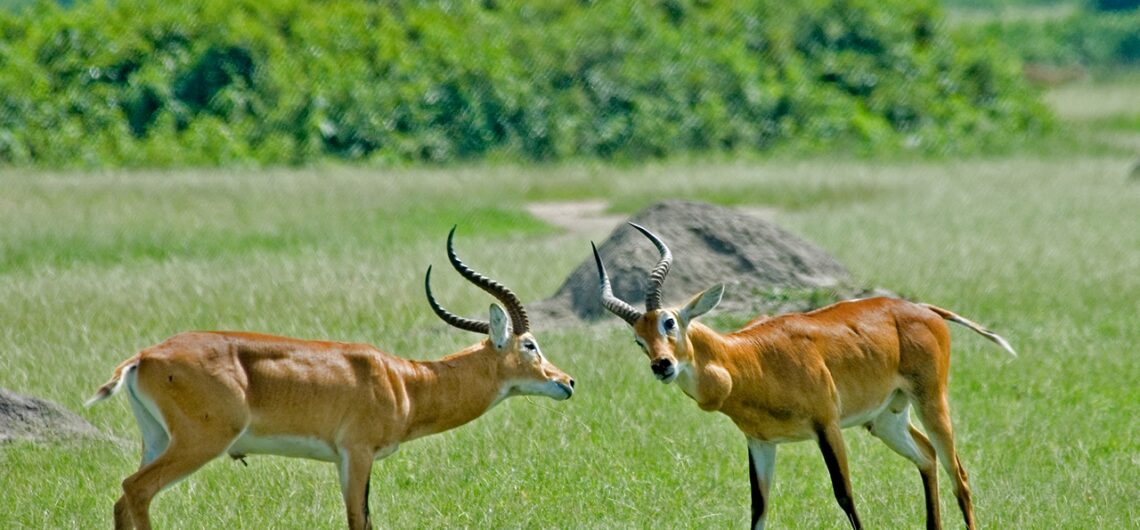
  • Uganda kobs
  • Oribis
  • Spotted hyenas

One of the park’s greatest attractions is the vast Narus Valley, where permanent water sources draw large concentrations of wildlife, making it one of the best locations for game drives. Watching massive herds of buffalo grazing across the open plains while predators quietly patrol nearby is an unforgettable safari experience.

For bird lovers, Kidepo is a true paradise. The park hosts rare and endemic bird species, making it one of Uganda’s top birdwatching destinations.

Stunning Landscapes

Kidepo Valley National Park is famous for its breathtaking scenery. Endless golden savannahs stretch toward distant mountain ranges, while seasonal rivers, rocky outcrops, riverine forests, and acacia woodlands create diverse ecosystems that support an abundance of wildlife.

The park is surrounded by the rugged Morungole Mountains, providing spectacular panoramic views and endless photography opportunities. Sunrise and sunset transform the landscape into a canvas of warm golden and orange hues, creating unforgettable moments for every visitor.

Unlike many other safari destinations, Kidepo remains peaceful and uncrowded, allowing guests to enjoy nature in complete tranquility.

Experience the Rich Culture of the Karamojong

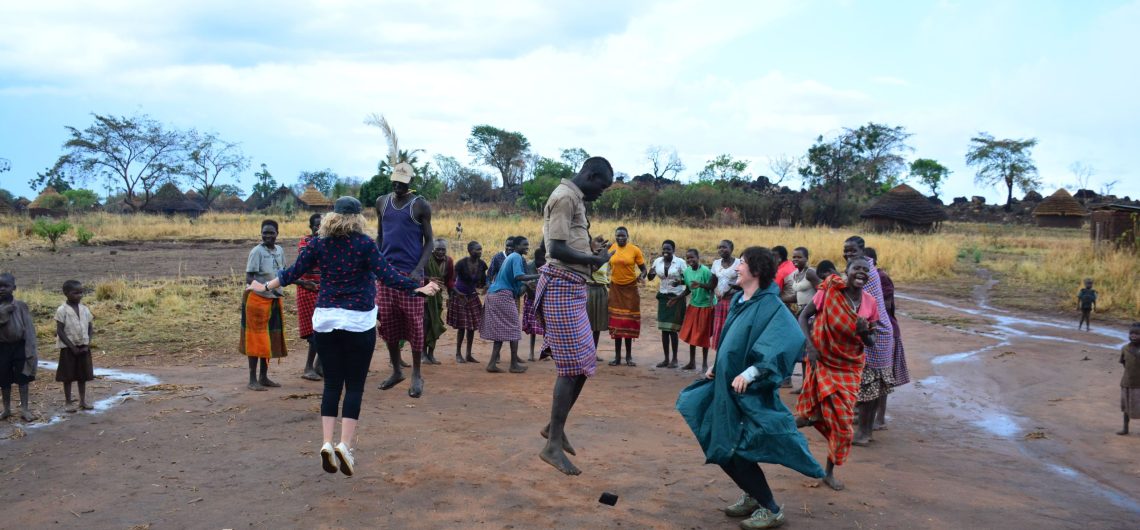
Beyond its incredible wildlife, Kidepo Valley National Park offers visitors the chance to experience the fascinating traditions of the Karamojong people, one of Uganda’s most distinctive pastoral communities.

A cultural visit provides insight into their traditional way of life, including:

  • Traditional dances and music
  • Visits to authentic manyattas (traditional homesteads)
  • Local handicrafts and souvenirs
  • Storytelling and cultural history
  • Cattle-keeping traditions and pastoral lifestyle

These cultural encounters provide a deeper appreciation of the region’s heritage and allow visitors to connect with one of Uganda’s oldest communities.

Top Things to Do in Kidepo Valley National Park

Game Drives

Morning and evening game drives offer excellent opportunities to observe predators and herbivores in their natural habitat. The Narus Valley is particularly famous for its high concentration of wildlife, making every safari exciting and rewarding.

Guided Walking Safaris

Walking safaris provide a unique opportunity to explore the African wilderness on foot under the guidance of experienced Uganda Wildlife Authority rangers. Visitors learn about animal tracks, native plants, insects, birds, and the delicate balance of the ecosystem.

Bird Watching

With over 475 recorded bird species, Kidepo Valley National Park is one of the finest birding destinations in East Africa. Birdwatchers can spot both resident and migratory species in diverse habitats across the park.

Cultural Tours

Spend time with the Karamojong people and experience their vibrant traditions, ceremonies, music, crafts, and daily lifestyle.

Nature Photography

The park’s untouched wilderness, dramatic landscapes, spectacular sunsets, and abundant wildlife make Kidepo a dream destination for photographers.

Best Time to Visit Kidepo Valley National Park

Kidepo Valley National Park can be visited throughout the year, but the dry seasons offer the best wildlife viewing conditions.

Best months to visit:

  • December to February
  • June to September

During these months, animals gather around water sources, making them easier to spot during game drives.

The rainy seasons offer lush green scenery, excellent birdwatching opportunities, and fewer tourists, making them equally rewarding for nature lovers.

Accommodation in Kidepo Valley National Park

Despite its remote location, Kidepo offers a variety of accommodation options suitable for every type of traveler.

Visitors can choose from:

  • Luxury safari lodges
  • Mid-range safari lodges
  • Comfortable tented camps
  • Budget accommodation

Many lodges overlook the vast plains, allowing guests to enjoy panoramic views and occasional wildlife sightings directly from their rooms.

Travel Tips

To ensure an enjoyable safari experience, consider the following travel tips:

  • Travel using a reliable 4×4 safari vehicle.
  • Carry binoculars for better wildlife viewing.
  • Wear lightweight clothing in neutral colors.
  • Bring sunscreen, sunglasses, and a wide-brimmed hat.
  • Pack a quality camera with spare batteries and memory cards.
  • Carry enough drinking water during game drives.
  • Book your safari with an experienced tour operator for the best experience.

Conservation and Sustainable Tourism

Kidepo Valley National Park plays an important role in conserving Uganda’s rich biodiversity while supporting surrounding communities through sustainable tourism initiatives.

Revenue generated from tourism contributes to wildlife protection, anti-poaching efforts, habitat conservation, and community development projects. By visiting Kidepo, travelers directly support the long-term preservation of one of Africa’s most remarkable wilderness areas.

Responsible tourism helps ensure that future generations can continue to enjoy this extraordinary destination.

Why Visit Kidepo Valley National Park?

Kidepo Valley National Park is one of Uganda’s greatest hidden treasures. Its untouched wilderness, spectacular scenery, abundant wildlife, rich birdlife, and vibrant cultural experiences combine to create one of Africa’s most authentic safari destinations.

Unlike many popular national parks, Kidepo offers a peaceful safari experience with fewer crowds and a true sense of adventure. Whether you are watching lions stalk prey across the savannah, photographing elephants beneath ancient acacia trees, or learning about the traditions of the Karamojong people, every moment spent in Kidepo is unforgettable.

For travelers seeking an authentic African safari far from the crowds, Kidepo Valley National Park is a destination that deserves a place on every Uganda travel itinerary.

Plan Your Kidepo Valley Safari Today

Discover the untamed beauty of Kidepo Valley National Park with a tailor-made safari designed to match your travel style. From thrilling game drives and guided walking safaris to unforgettable cultural experiences, Kidepo offers an adventure unlike any other in Uganda.

Contact us today to start planning your Kidepo Valley National Park safari and experience one of Africa’s last truly wild frontiers.

The best place for chimpanzee tracking in Uganda and east Africa is kibale forest national park blossoms in the western part of Uganda. It is referred to as the capital primates of the world the best place to trek chimpanzee in east Africa. Kibale national is not only aroma to 1500 chimpanzees but also harbor 324 species of birds indentified 250 species of trees and shrubs indentified 144 species of butterflies indentified, and other indentified numbers of 12 primates’ species.

Kibale national park covers 766 square kilometers and protecting moist evergreen rainforest in Uganda and east Africa, (296 sq mi) in size located between 1,100 meters (3,600 ft) to 1,600 meters (5,200 ft) in elevation.

How to get kibale national park

Kibale national park is located in western part of Uganda in districts of Kabarole, Kamwenge, Kyenjonjo and Fort Portal tourism city it is accessible from kampala/Entebbe from north route through Mityana, Mubende ,Kyegegwa, Kyenjonjo district road and you can also use Kampala Masaka, Mbarara Ibanda Kamwenge then to Kanyanchu visitation centre of kibale national park where most activities are done like chimp trekking, chimp habituation experience, primate walk and community swamp walk along Bigodi wetland sanctuary for primates and home of Great Blue Turacco bird species.

 Uganda chimpanzee experience travelers mostly use the northern route saying it is shorter and faster with the distance 358km with tarmac road unto kibale national park boss Kanyawara head office of kibale national park and Kanyanchu visitation point of kibale forest.

Kibale forest national has the highest number of primates in Uganda, east Africa and Africa. With 13 species of primates indentified are chimpanzees, the closest relative of human being sharing 98.7% genetic material. Kibale has 1500chimpanzee which proves Uganda’s biggest number of this endangered species. Kibale is also to home of rare I’Hoest’s monkey as well as east Africa biggest population of endangered red colobus monkey, red tailed monkey, blue monkey, grey cheeked mangabey, olive baboon, bush baby among others  with some good number of mammals like forest buffaloes, forest elephants, bush pig, and many others like reptiles and amphibians

You can book your trip tom kibale national with trustfully company to organize or plan for are 3days chimpanzee trekking , 6 days chimpanzee trekking , and 10 days chimpanzee safari to Uganda.

Travelers can also choose to fly from Kajansi airfield or Entebbe airport. It is the internal flight with aero link and it takes 45-50minutes to Kasese air trip in Nyankasanga and from their you can be picked up driven to kibale national by road from to kibale national park. You can book yourself 3 days fly to kibale national park according to the time you have for your vacation to spend on your chimpanzee experience

How to book trip to kibale national park for your best chimpanzee experience in east Africa and Uganda

You will contact trusted tour operator/company (letsgogorillauganda tours and travel) operating safaris in Uganda who will give you the plan on how to carry out chimpanzee and give you the budget and the requirements of the trip including trekking permits booked from Uganda wildlife authority by recognized tour company  and the after your confirmation of the trip and agreed budget, the tour operator will contact and book your permit from Uganda wildlife authority which will be given to you on your day of chimpanzee trekking or habituation experience before the briefing  by the ranger guides who will lead you the forest.

Permit is the document that allows visitors to access the national park for activities like chimpanzee trekking, chimpanzee habituation requires trekking permits to enter the forest for the mentioned activities.

Chimpanzee facts

  • The first thing you should remember about chimpanzee is that they are not like monkeys. They are apes like Gorillas, Orangutans and of course humans and in fact they share genetically and are closest living relatives on earth sharing more than 98.7% of genetic , “blueprint”. This means that less than 2% of our DNA is different from chimpanzees.
  • Although chimps are our closest relatives, their brains have measured  at around 282 to 500cc and human brains are appromixamately three times that size , so we are still well are head of them in that area at least so Far.
  • The chimpanzee was the first non-non human to learn American sign language
  • In 2008, a chimpanzee named Anjana adopted and raised two babies of white tigers named Mitra and Shiva after hurricane
  • Elephants and chimpanzee have ability to display behaviors patterns similar to post- traumatic stress disorder and depression.
  • Humans have the same number of hair follicles as chimpanzees have.
  • Chimpanzees can indentify each other from pictures of their butts.
  • In 1954, Congo was the chimpanzee who learned how to draw and paint, Congo was famous abstract painter whose painting were sold to piscasso, Dali among others for up to USED=26,000/=
  • Chimps use medicinal plants to treat themselves for illness and injury.
  • United states and Gabon are the only two countries that allow experimentation on chimpanzees
  • Chimpanzees fart so loudly and frequently that scientist locates them in forest occasional by following fart.
  • Comparative analysis indicated that chimpanzee and bonobos show population level right handedness, whereas gorilla and orangutans do not.
  • While chimps consume a wide variety of foods, including the fruits and leaves of hundreds of plants, they prefer fruits of fig or ficus trees. They also eat meat; their favorite is red-colobus monkey and invertebrates such as termites. This only makes an estimated of 2% of their diet.
  • Chimpanzee has thickets body with long arms, short legs and no tail. Much of the body is covered with long black hair, but the face ears, fingers and toes are bare. They also hands that can grip fairly, allowing them to pick objects, the discovery that they use tools for certain purposes surprised the world.
  • Chimpanzee are mainly found in green rainforest like kibale national park in Uganda wet savannah while  they spend equal time on land and in trees, they do most of their feeding  and sleeping up in trees.
  • Chimps are one of the animals that are known to make and use tools, they have been observed stripping the leaves off twig and then dip it into termite nest to catch insects and chewing the end of stick to make of more water absorbent so that it can be used as a “dipping stick”
  • Chimps can very aggressive, groups of males will plan and execute attacks on another chimp often causing injuries and fatalities, serious fatal attack on humans have also been reported.
  • Chimpanzees are one of the only two species in the genus pan, their other being bonobo and both are found in sub Saharan Africa. It was taught that chimpanzee and bonobos were one species but they are now recognized as two distinct species , the chimpanzee( pan troglodytes) is found north of Congo river and splint into 4  sub species, the bonobo (pan paniscus) is found south of the Congo river and has not been splint into any sub species .
  • Fifty years ago, there were probably million chimpanzees in Africa. Today chimpanzee is an endangered species with as few as 170,000 left in the world.
  • Chimpanzee can live for more than 50 years, this is another reason why chimps are purchased as pets often end up in sanctuaries
  • Chimps change their bedding every day by making new nests every evening before in new places up in trees
  • Chimps live in communal basis and each community has culture and way of life. More excitingly each community has a leader which chooses amongst them.

Activities in kibale forest that you can do your chimpanzee experience in Uganda or east Africa

Chimpanzee trekking

Kibale forest national park is the best place for chimpanzee trekking in Uganda, east Africa and Africa where you are given 100% of meeting the closest of human being chimps in its natural habitat that will reward you with unforgettable and ultimate experience

Kibale is referred to as the” primate capital of the world” and its popular known for habituated chimpanzee in the world read for tracking

This excursion is quiet adventure that only keeps the adrenaline pumping but pleasant the challenges in terrain with obstacles to encounter with the chimpanzees in their natural environment within the tropical rain forest of kibale national park

While on your guided nature walk in the tropical rain forest in search of chimps, red-tailed monkeys, black and white colobus monkeys, baboons, bush baby and many others are seen while caring out trekking

Kanyantere community group has 120 individuals and its 30 years old and always ready for travelers for chimpanzee trekking in kibale forest and it is the first to group that was introduced in kibale forest national 30 years back for tourism

Chimpanzee habituation experience in kibale forest national park

Chimpanzee habituation experience is the one of the exciting activities within kibale forest national park.  Here you will learn the lifestyles and behaviors of chimpanzee the closest relative of human of being sharing 98.7 genetic material, you spend full day walking through the forest, the ranger guides will educate you the life and behaviors of chimps and also learn the flora and fauna in the park.

You will witness how chimps de- nest their nocturnal nest(something they do each morning), feed, groom the young, play and construct nest in the evening etc. there are 13 species of primates including Black and White Colubus monkeys, red colobus monkeys, L’Hoests monkeys, Baboons, Bush Baby and abundant chimpanzee. While over 325 avian species are recorded in kibale 144 species of butterflies and many more.

Chimpanzee starts early morning at 6:00am and end 7:00am in kibale while learning with kisongi community group with of 180 individuals and it is was established in 2018 for habituation experience and its now for travelers that are ready for habituation experience in kibale forest national park and many other groups are still under habituation but still wild like burange  community group soon to be introduced for tourism and habituation experience .

Bigodi swamp walks for primate watching, birding and then community visit

Bigodi swamp is the community based organized that was started by organized group of few individuals 20 years with the aim of promoting tourism in the community. The sanctuary offers great birding opportunities and nature walks while learning indentifying and  viewing different birds and primates  and then after swamp you can participate in the village walk to Bigodi community you have chanced to mix with the African traditions in terms of life styles and entertainment with their cultural dances and learning their culture heritages and customs.

Here it will make of your 3 days chimpanzee experience in kibale forest national park

Book your trip with us: www.ubuntuugandajourney.com or email: info@ubuntuugandajourney.com for your chimpanzee experience in Uganda and East Africa 

Golden monkey trekking in Uganda and Rwanda.

Golden monkey trekking activities are some of the fascinating touristic activities that have taken shape and gained popularity in the past two decades among travelers in East Africa. This activity takes place in the Virunga Mountain ranges where these primates are endemic to. Golden monkeys are a subspecies of the blue monkey and there are other monkeys in Eastern Africa that almost look like these orange- and gold-colored primates. They inhabit the forests in central Africa, especially in the highlands. Golden monkeys prefer bamboo habitats and that is where they are usually trekked.


Golden monkey trekking national parks in Uganda and Rwanda.

Uganda and Rwanda host the endangered golden monkeys. They can be found in the thick rainforests where national parks have been gazetted in the past two decades to ensure they are protected and conserved for the next generations. The national parks encompass;


Mgahinga national park.

Mgahinga National Park is the only National Park in Uganda that hosts golden monkeys. The park is located in the southwest of Uganda in Kisoro district and occupies an area of approximately 33.7 square kilometers. Mgahinga spans 3 of the 8 Virunga mountains that are great habitat for the golden monkeys. It is on the slopes of the mountains that the golden monkey’s exciting adventure takes place.


Gishwati-Mukura National Park.

Gishwati-Mukura National Park is comprised of two thick primeval rainforests that is to say Gishwati and Mukura after which the park is named. The park occupies an area of about 34 square kilometers in the northwest of Rwanda. It is a renowned home to several primates and golden monkeys are a section of them. Serious tourism in the park started in 2019 and it is now booming due to the popularity of the activities therein, a reason why an adventure-seeking traveler should check it out whenever in Rwanda.


Volcanoes National Park.

Sitting on an area of approximately 160 square kilometers in the north of Rwanda, Volcanoes National Park is a portion of the huge Virunga conservation area. It is home to five of the 8 Virunga mountains which are the exact place where the golden monkeys reside and their trekking activities are hosted.

Volcanoes are home to not only golden monkeys but other primates too, especially the black and white colobus monkeys, red-tailed monkeys, l’hoests, blue monkeys and owl-faced monkeys not forgetting the beautiful bird species too, especially the East African endemics. They encompass green turacos, green breasted pitta, bar-tailed trogon, bush shrikes, African paradise flycatcher, African fish eagles, African green pigeons, African darters and jacanas.

Volcanoes National Park is a renowned one-stop center for golden monkey trekking in Rwanda and offers extremely sensational experiences.


How it is done and what it costs.

The golden monkey trekking activity enables the visitor to explore the forests in East Africa, moving through various landscapes on foot in search of exciting creatures.

Once encountered, visitors are allowed to spend at least an hour observing the golden monkeys. Taking pictures of them and learning several things about them. The tourist guides provide information about the genetics and other aspects of the lives of the golden monkeys which even make the trip more exciting and informative.

Golden Monkey trekking permits in Uganda can be purchased at $60.00 for foreign nonresidents, $60.00 for foreign residents, and Uganda shillings 40,000 for East African citizens and in addition to this you add the park entry fees. In Rwanda, the Golden Monkey permits cost $100 for the foreign nonresidents, $65 for the foreign residents, and Rwandan francs 4000 for the Rwandan citizens.


The most appropriate time to visit and trek golden monkeys.

Uganda and Rwanda are closely located near the equator though Rwanda is not crossed by it like Uganda. Due to that fact, they are blessed with two seasons every year that is to say the dry and wet seasons. The dry seasons are the best to traverse through the rainforests and mountainous terrain.

The dry seasons occur from May to September and December to early March.


The Bigodi community walk parades an experience of deep immersion into breathtaking nature. The pathways through the moist, riverine, and evergreen vegetation offer visitors the opportunity to marvel at some of the most exciting creatures there are in Uganda. Bigodi Community is located in the Bigodi wetland on the outskirts of Kibale National Park.

Experience of the Bigodi community walk.

The Bigodi community walk presents the chance to indulge in the swamp walks that in an exceptional way allow the visitor to appreciate the natural endowments of Uganda. Visitors get to observe the various types of wetland vegetation that are good for photography and videography since they form a visually appealing scenery.

The community walk helps visitors participate in empowering local communities. Various visits are launched to the homesteads and schools in the community to help empower and inspire them. This is done through several humanitarian work that helps boost the lives of the locals.

While on the walk, guests can spot several primates especially the chimpanzees, black and white colobus monkeys, and the blue monkeys that enjoy wandering in the nearby forests.

Travelers also have the golden opportunity to learn about the cultures and traditions of the local people. The Bakonzo who inhabit the villages around have such an exciting culture.

They are such a hospitable society that always welcomes visitors and showcases their unique traditional dances as a form of entertainment to the visitors in their land. Such exciting moments make the trip worthwhile.

How the community walk is conducted and how much it costs.

The Bigodi community walk is conducted under the full-time guidance of a professional tourist guide. The guide is well-versed with information about most creatures in the area and other aspects of the community.

They gladly share information with the visitors ensuring that they leave the community informed and happy with their experiences.

Under the company of the guide, visitors follow the paths in the villages, and conduct visits to the local primary school, and churches on the traditional homesteads.

Through these visits, guests get to learn about the way of life of the locals and enjoy the folklore as told by the elders in society. The elders are entrusted with the activity of storytelling due to the experience they’ve gathered over the years and the fact that they are eyewitnesses of some past historic events they talk about makes it even more rewarding.

Other activities to do in Bigodi.

Bird watching. Visitors can bypass the Bigodi sanctuary which is a concentration for the East African endemic bird species. Guests therefore have the opportunity to stare at beautiful birds especially shoebills, Black and white casqued hornbills, black bee eaters, cinnamons, cuckooshrike, egrets, and African jacanas.

Local food experiences. Visitors to the community get the golden opportunity to test the local cuisine. They have a taste of yams, matooke, millet, and some local brew made from sorghum for those who wish.

Crater lake viewing. The community is close to the breathtaking crater lakes of Ndali and Kassenda. They are endowed with beautiful scenery which makes the place a nice one to be at, admire nature in its purity, and escape the noise of the cities.

How to get to the Bigodi community.

The Bigodi community can be accessed by road. Visitors undertake the travel to the community in comfortable safari vehicles that can make it through several terrain types.

Visitors drive along the Kampala – Mubende – Fortportal highway. The drive to the community takes about 4 hours and 53 minutes covering the distance of approximately 276 kilometers.

Bigodi Community is approximately 30 kilometers from Fort Portal City and about 6 kilometers from Kibale Forest National Park.

Best time to visit.

Guests willing to participate in the Bigodi community walks need to note that the community can be accessed at any time of the year.

However, it is equally important to note that the dry seasons offer amazingly incredible experiences and come off as the best seasons in which one can indulge in community walks.

The dry seasons usually occur from June to September making up the long dry season. Conversely, the short dry season is always on from December, and January up to February.

CHIMPAZZE TREKKING IN UGANDA

The common or eastern chimpanzee of the two subspecies, is the only subspecies in Uganda with an estimated population of about 15000 individuals living in Kibale, Bugoma forest, Kalinzu forest reserve

WHERE TO FIND CHIMPAZEE IN UGANDA

Chimpanzee are trekked in different destinations as will be listed below

  1. Kibale National Park

Kibale National Park is the most popular for the chimpanzee and is considered as the best place to trek wild chimpanzee on earth, making it  the most ultimate highlights for the visitors to this park. Over several years of conservation and habituation ,the chance of seeing them has risen to over 95%

Kibale National Park is known as Uganda’s premier chimpanzee destination with over 30 years of trekking history .And it’s estimated that over 1500 chimpanzee lives in this area that’s approximately the same size as New York

HOW To purchase chimpanzee tracking permit

You can get chimpanzee trekking ticket trekking ticket at Uganda Wildlife Authority Park Head Quarters at $150 for Foreign Residents and $200 Foreign Non Residents

HOW TO get kibale national park

The quickest route to Kibale National Park by road is to via Kampala -Fort Portal high way ,the park can be reached over a fully tarmacked road for a distance of 326 km apploximately 6 hours .for the visitors over nighting in Fort Portal is only an hour drive away

HOW LONG DOES CHIMPANZEE TREKKING TAKES

The trek last about 3 hours and include maximum of one hour with chimpanzee, during which you can expect to see them personal and discover the beauty, intelligence and social structures

KyAMBURA GORGE

Chimpanzee trekking can be done at Kyambura Gorge located in the out skirts of Queen Elizabeth  National Park south western part, This gorge approximately has 80 chimpanzees which act as the main attraction in this sector of Queen Elizabeth National park with beautiful river sites .This activity in Kyambura Gorge happens at 8:00 am and 1:00 pm  at each designated time ,trekkers leave in groups ,this involves movements over a long distance on a rough terrain  as you also need to climb down  and up the underground forest

BUDONGO FOREST

Chimpanzee trekking is the most popular activity here followed by nature walks, over 600 chimpanzees call this largest forest home. Chimpanzee habituation experience takes a period of 2 to 3 years to be completed and its only carried out in the wet /low season during the months of March to May and October.

LOCATION OF BUDONGO FOREST

Budongo forest reserve is located in Masindi District and is part of Murchison Falls National Park covering area of 826 square meters, this forest is in north of Uganda’s capital city Kampala making 4 hours drive through road though one can access through air via pakuba air field

Chimpanzees are an exciting primate species inhabiting the Ugandan forests scattered all over the Western and southern parts of the country. Chimpanzee trekking as an outdoor tourism activity allows guests to spend ample time with chimpanzees, learning and unlearning multiple things about the lives of the primates. Chimpanzees are a species of great ape native to the forests and savannahs of tropical Africa. They have 4 genetically confirmed species with a 5th proposed one according to IUCN reports. Chimpanzees can be found in Uganda in the biodiverse tropical rainforests.

Chimpanzee locations in Uganda.

Kibale forest.

Lying on an area of about 795 square kilometers, Kibale National Park spans a thick tropical rainforest harboring up to 13 primate species including chimpanzees. It is blessed with beautiful and most diversified primeval forests in Uganda.

Kibale forest dominates the central and northern parts of the park along the Fort Portal plateau. The Kibale forest lies at the park’s northern tip which elevates up to 1590 metres above sea level. It is known as one of the best safari destinations in Africa and the world all over for chimpanzee trekking and habituation, A reason why it was named “the primate capital of the world”.

Budongo forest.

Budongo forest spans a wide semi-deciduous tropical rainforest located in the Albertine rift on the outskirts of Murchison Falls National Park. The forest lies in the northeast of Lake Albert. It stretches to an area of about 825 square kilometers in the western region of Uganda covering some parts of the Hoima and Kikuube districts. Budongo Forest is a renowned home for both diurnal and nocturnal primates including the chimpanzees. It offers chimpanzee trekking activities too. The fact that it provides additional views of the underlying Lake Albert further makes it more beautiful and a place to be for a vacation and getaway from the day-to-day lives of bustling cities.

Kyambura gorge.

Kyambura Gorge unveils the extensive valley comprising a thick tropical rainforest. It is a renowned home to chimpanzees and several other primates. Kyambura Gorge showcases the beauty of a forest trapped in a valley on the outskirts of Queen Elizabeth National Park. It extends up to 100 meters deep.

The gorge is served by the river Kyambura tributaries that contribute to its overall beauty as they help serve it water all year round contributing to its evergreen look. This further makes it a better habitat for the chimpanzees since they do not have to move long distances and leave it in search of water and what to eat.

Kyambura offers exciting chimpanzee trekking activities throughout the year and therefore travelers seeking to spend time with chimpanzees should always endeavor to check it out.

Cost of chimpanzee trekking per destination.

Chimpanzee trekking in Uganda has different prices attached to it depending on the destination where one is going to trek. This is mainly because different destinations offer varied experiences.

Trekking chimpanzees in Kibale National Park costs a nonnegotiable price of $200 for foreign non-residents, $150.00 for foreign residents, and Uganda shillings 150,000 for East African nationals.

In Budongo forest, trekking the chimpanzees goes for $130.00 for foreign non-residents, $120.00 for foreign residents, and $85 for East African citizens.

In Kyambura Gorge, the chimpanzee trekking activity costs $50.00 for foreign non-residents, $40.00 for foreign residents, and Uganda shillings 30,000 for East African citizens.

Favorable time to trek chimpanzees in Uganda.

Trekking chimpanzees in Uganda is done throughout the year in all the destinations. The dry seasons however are the most favorable and appropriate times in which tourists can indulge in chimpanzee tourism activities.

The dry seasons are characterized by low rainfall which therefore present uninterrupted moments for visitors to trek the chimpanzees, and make their way through the thick rainforests with no hardships. The dry seasons run from June to September and December to February.


Uganda is a beautiful country in East Africa, it is commonly referred to as the pearl of Africa due to its natural composition, the contrast biodiverse environment from the hilly sides of the country side to savannah plantations, and it is bordered by Rwanda, Kenya, democratic republic of Congo and Tanzania. The country is most sought of when it comes to primates commonly for the critically endangered species of the mountain gorillas and Chimpanzee. Uganda Visa is the document that is offered to grant you access into the country weather you are flying into Uganda or driving through its land borders.

Uganda visa is given to tourists coming into the country for tourism or any other purposes, Visas are applied for online on the Uganda authority on the ministry of internal affairs, it takes 90 days for it to be approved, after this period of time without response in case the hold is automatically released, requirements for the visa include a valid passport copy, the biodata page has to be valid at least 6 months validity, a tour plan, confirmation itinerary from accommodation , recent passport size photograph, yellow fever vaccination card, return airtickets,Visas are charged $50 for a single entry once you have made payment it is nonrefundable.

When coming to all east African countries, it is wise to buy the east African visa it costs $100 this permits you to travel to Uganda, Kenya and Rwanda with the same visa entry, all visas are a must to be applied online as the process is as simple as described online, follow the steps carefully in order to apply for the visa. It is at least wise to apply one month prior to travel to avoid inconveniences, and having cancelations, the online process is not pending but a single application.

Approval letters are only issued by email when traveling it is wise to print every paper you have, for vaccines, see your doctor to advise further on necessary vaccines you might need for your travel to Africa., take note of your application number, Tourist visas are valid for only 45 days this visa can only be acquired only if you don’t have any running visa.

Uganda can be accessed through its main entry point the Entebbe international airport or through borders like the Cyanika border, the Busia border, swam border in eastern Uganda. Once you pass here at the airport, there is available accommodation in the country ranging from Luxury to the best budget.

Uganda can be visited all year round but best during the dry season between December-February and June- September,  it is wise when considering a wildlife safari to Uganda to pack right including waterproof covers for phones and cameras, hiking boots, warm clothes, long sleeved hits and trousers, insect repellants and any other items of personal nature. The best things to do while here include wildlife game drives, gorilla trekking, chimpanzee trekking, guided nature walks, night game drives, birding , volcanic climbing among other nice things to do.

What do mountain gorillas eat?

Mountain gorillas are primate species in a few ecosystems of Africa, they are a subspecies of the eastern gorilla’s gorilla beringei beringei living in mountainous areas in Uganda they are found in the Bwindi Impenetrable National Park and the Mghainga National Park, in Rwanda they are situated in the volcanoes national park while in the democratic republic of Congo in the Virunga national park, these are the only places of the world to see the critically endangered species, they roam freely in the conservation areas without being captivated. The Bwindi impenetrable national park in the southwestern corner of Uganda hosts half the population of the gorillas they love within the four sectors of the park Nkuringo, Rushaga, Buhoma, and Ruhija.

What do gorillas eat? This is a question that lingers so many times, mountain gorillas are mostly herbivores in nature, being the world’s largest primates they need lots of food to survive, they feed on forest plants, dead tree backs, leaves stems, fruits, mushrooms and occasionally insects, since it is a high altitude zone, there is less of fruit and more of plants, the primates are specific on what they want to eat on a particular plant type, for example, they have been sighted stripping plants in order for them to get the inner part of the stem other plants like mimlopsis they take on the leaves. An adult mountain gorilla eats about 18 kilograms of food.

Mountain gorillas are not so water friendly and hence it is hard to drink water however the plants which they feed on are succulent enough for them to have enough water in their bodies for survival. Gorillas do not feed in one point but rather after consuming, they move to the next part to allow the regrow of the vegetation. They live in families of up to 20 members led by a male silverback, baby gorillas are taken care of by their mothers until the age of 2 years. The primates are territorial in nature hence it is hard to find more than 1 silverback in the same group, families consist of blackbacks, juveniles, and females, they nest on the ground which sometimes makes it easy for travelers to know the actual number of the primates as each one of them makes a nest except for the babies who share with females. They are playful jumping from one tree to another.

Mountain gorillas present an opportunity to experience mountain gorillas, trekking is one of the amazing things to do while in Uganda, it takes place beginning at the park headquarters, in groups of 8 you will be allocated a gorilla family to track, it takes 2-8 hours in search depending on how far the gorilla families have moved. Gorilla trekking is a strenuous activity that will need preparation both mentally and physically, upon meeting the primates an hour is allowed while with them later which you return to be awarded a gorilla trekking certificate, for travelers who would like to spend more time with the primate’s gorilla habituation experience is the most ideal thing to do as it allows am all day experience.

SPOT FISHING IN UGANDA

WHAT YOU NEED TO KNOW

Spot fishing in Uganda is mainly centered around Lake Victoria which is one of Africa’s Great Lakes. Uganda is not well marketed by the government despite having many water bodies. In fact, a 3rd of Uganda is covered by water. In Lake Victoria, Uganda has the largest Lake in the African continent. Uganda is the source of the longest river in the world, River Nile. Some of the world’s famous anglers have gone fishing in Uganda. They include Jeremy Wade, John Wilson and Zeb Hogan of the National Geographic Channel.

Uganda has over 350 species of fish. The two major species caught for commercial purposes are the Tilapia and Nile Perch. The other types of fish are the Protopterus, lung fish and cat fish. The Nile perch is arguably the largest fish one can catch in Uganda. They can weigh more than 150kgs. Introduced in Uganda in the early 19th century, they dominate the waters of Uganda. The Nile Perch is often caught using the smaller tiger fish as a bait. The Tiger fish has beautiful colors of the rainbow but are very resilient with sharp teeth and hard jaws.  Other large fish in Uganda are the lung fish and Tilapia. Tilapia is the most preferred fish eaten in Ugandan homes although the small silver fish is gaining popularity for its nutritious value.

Sport fishing has gained prominence in Uganda since the early 90’s and is among the top things to do in Uganda. The local population and Uganda’s middle class have not fully embraced this amazing activity. Sport fishing is perfect for family bonding or getting together as a group of friends. One does not need to have any prior experience fishing in order to take part in this sport. In most cases, all one needs to do is join the company of experienced anglers who will teach them a thing or two about the sport.

Here are some keys points about spot fishing in Uganda.

SPECIES: The Nile Perch is the most sought-after fish in Lake Victori, other species you might encounter include Tilapia, catfish and Protopterus

LOCATION: Spot fishing is often done near the shores of Lake Victoria or from boats. Popular spot includes: Murchison Falls National Park, Lake mburo, Sipi falls in Kapchorwa and Ssese Islands, Entebbe and Jinja on Lake Victoria. Murchison falls is the most attractive part found in the park. This Murchison Falls form when the Nile water squeezes through a narrow gorge before exploding 40 meters down in a mighty fall. The Murchison Falls National Park is a great place to go for fishing while in Uganda. The turbulent falls are rich in oxygen which attracts huge Nile perch – Some weighing over 90 Kilograms. The largest on record was 108 kilograms. The section of the river Nile flowing through the park is also home to Tilapia, catfish, Tiger fish (Awaka), barbell, Tilapia, ferocious fighter, Angara and yellow fish among other species. Fishing is usually done by boat around the banks of the river although anglers can walk to the base of waterfalls to throw their lines.

EQUIPMENTS: Anglers typically use medium to heavy duty fishing rods and reels, along with live or artificial bait suitable for the targeted fish species.

REGULATIONS:  Fishing in Uganda requires a valid fishing license, which can be obtained from the Uganda Wildlife Authority (UWA). There are also regulations regarding catch limits and sizes to ensure sustainable fishing. Remember to respect local customs and regulations while fishing in Uganda to ensure a positive experience for both you and the local community.

Guides: Hiring a local fishing guide can be beneficial, as they are familiar with the best fishing spots and techniques. They can also assist with obtaining a license and equipment.

SEASON: Fishing is generally good year-round, but the best time for spot fishing is during the dry season (December to February and June to August) when water levels are lower, making fish easier to spot.

SAFETY: Always prioritize safety when fishing. Make sure to wear a life jacket when fishing from a boat and be aware of weather conditions that could affect your fishing trip.

CONCLUSION.

Spot fishing is a very fun and relaxing activity that makes a great time on holiday. Even for someone who has never really been into the whole fishing thing, spot fishing can be quite enjoyable and meditative.

The area above showcase some of the best spots where you can enjoy spot fishing while on a Ugandan Tour. The good thing is that sportfishing can be added as part of your itinerary. This combines it with other activities such as Gorilla and chimps trekking, wildlife safari, white water rafting, Hiking, Birding and many more.

In cases where you are required to carry your own fishing gear, we will arrange to get you the gear to use at a small extra fee That way, you won’t have to carry or buy new gear just for the trip. More information you can check out in our Travel Blog.

You can visit Uganda for sport fishing at any time of the year. Talk to us and we’ll help you set everything up – to make sure you enjoy every little detail of your fishing safari. Send us a request for a fishing safari and we shall draw up a customized tour itinerary based on your specific needs, schedule and budget.

We appreciate you spending the time here. We can only hope that this information was helpful. If you have any questions, please don’t hesitate to bring them to our attention.