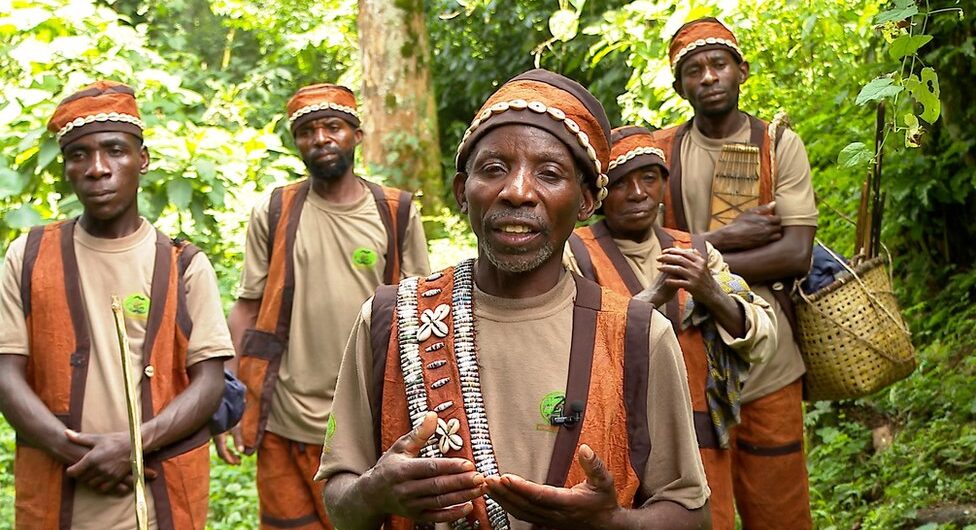
The Batwa cultural experience takes place along the foothills of the Bwindi Impenetrable National Park and the Mgahinga National Park, the Bwindi Impenetrable National Park is known for the mountain gorilla species, the conservation area is said to have survived over time from the ice age era, it is subdivided into four sectors the Nkuringo, Buhoma, Rushaga and Ruhija, each of these has got habituated gorilla families, while the Mgahinga national park is renowned for golden monkeys and one gorilla group the park extends as part of the great Virunga volcanic mountain region. The Batwa are a special group of people also known as keepers of the forest.

They lived in the forest amicably together with other creatures until they were evicted due to conservation purposes, these have continued living in the surrounding communities, they are the last group of remaining short-structured people in Uganda, they hunted and gathered from the forest however of present they practice a bit of subsistence farming, they engage in community programs and joined the quo of civilization. These have however done a good job of passing their cultures onto the new generations.

Batwa cultural experience will give you a deep understanding of how these locals enjoyed the forest, they will show it to you through their eyes, dance to their traditional music, and make fire without using modern-day matches or lighters, they will also teach you the medicinal purposes of plants and what they treat, guests are allowed to participate too if interested. It is an engaging activity to consider on a visit to Bwindi impenetrable national park or Mgahinga National Park, there are chances of walking through the forest as well and meeting a few primate species, for example, the black and white colobus monkeys, vervet monkeys, and whispers from forest birds. A visit to the Batwa will require you to make payments for support which normally costs about $30 per person, it is done in the afternoon hours from 3:00 pm East African time.

Besides the Batwa cultural community, there are other things to do while in the region for example the gorilla trekking from the park headquarters you will be briefed about how to conduct yourself while with the primate species, and the hike through the forest is a tedious one however so rewarding by the end of the day, tracking gorillas takes 2-8 hours depending on how far the mountain gorillas have moved, it sometimes takes entirely the whole day or even not seeing them, however, in such incidents, guests are given a chance to track the following day. Birding in the Bwindi impenetrable national park, it is a rewarding point for birders into the ecosystem, there are over 300 species of birds that have been recorded here to date, some of these are endemics to the region for example the African green broad bill.

There is available accommodation in and around the conservation areas ranging from the best budget to Luxury Examples of facilities include Buhoma lodge, Chameleon Hill Lodge, Bakiga Lodge, and Ichumbi gorilla lodge, to mention few.
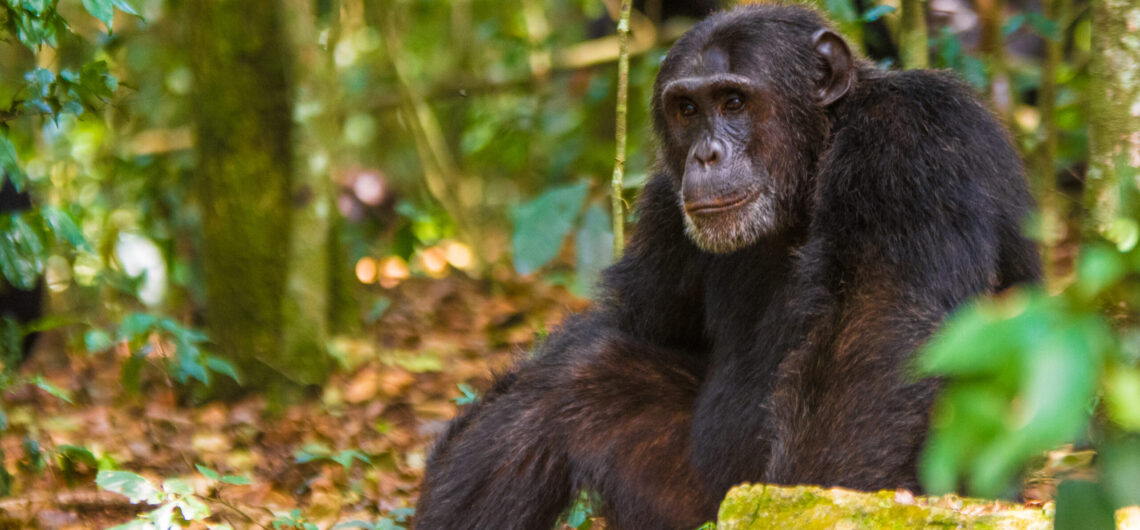
Chimpanzees are an exciting primate species inhabiting the Ugandan forests scattered all over the Western and southern parts of the country. Chimpanzee trekking as an outdoor tourism activity allows guests to spend ample time with chimpanzees, learning and unlearning multiple things about the lives of the primates. Chimpanzees are a species of great ape native to the forests and savannahs of tropical Africa. They have 4 genetically confirmed species with a 5th proposed one according to IUCN reports. Chimpanzees can be found in Uganda in the biodiverse tropical rainforests.

Chimpanzee locations in Uganda.

Kibale forest.

Lying on an area of about 795 square kilometers, Kibale National Park spans a thick tropical rainforest harboring up to 13 primate species including chimpanzees. It is blessed with beautiful and most diversified primeval forests in Uganda.

Kibale forest dominates the central and northern parts of the park along the Fort Portal plateau. The Kibale forest lies at the park’s northern tip which elevates up to 1590 metres above sea level. It is known as one of the best safari destinations in Africa and the world all over for chimpanzee trekking and habituation, A reason why it was named “the primate capital of the world”.

Budongo forest.

Budongo forest spans a wide semi-deciduous tropical rainforest located in the Albertine rift on the outskirts of Murchison Falls National Park. The forest lies in the northeast of Lake Albert. It stretches to an area of about 825 square kilometers in the western region of Uganda covering some parts of the Hoima and Kikuube districts. Budongo Forest is a renowned home for both diurnal and nocturnal primates including the chimpanzees. It offers chimpanzee trekking activities too. The fact that it provides additional views of the underlying Lake Albert further makes it more beautiful and a place to be for a vacation and getaway from the day-to-day lives of bustling cities.

Kyambura gorge.

Kyambura Gorge unveils the extensive valley comprising a thick tropical rainforest. It is a renowned home to chimpanzees and several other primates. Kyambura Gorge showcases the beauty of a forest trapped in a valley on the outskirts of Queen Elizabeth National Park. It extends up to 100 meters deep.

 The gorge is served by the river Kyambura tributaries that contribute to its overall beauty as they help serve it water all year round contributing to its evergreen look. This further makes it a better habitat for the chimpanzees since they do not have to move long distances and leave it in search of water and what to eat.

 Kyambura offers exciting chimpanzee trekking activities throughout the year and therefore travelers seeking to spend time with chimpanzees should always endeavor to check it out.

Cost of chimpanzee trekking per destination.

Chimpanzee trekking in Uganda has different prices attached to it depending on the destination where one is going to trek. This is mainly because different destinations offer varied experiences.

 Trekking chimpanzees in Kibale National Park costs a nonnegotiable price of $250 for foreign non-residents, $200.00 for foreign residents, and Uganda shillings 180,000 for East African nationals.

In Budongo forest, trekking the chimpanzees goes for $130.00 for foreign non-residents, $120.00 for foreign residents, and $85 for East African citizens.

In Kyambura Gorge, the chimpanzee trekking activity costs $100.00 for foreign non-residents, $80.00 for foreign residents, and Uganda shillings 50,000 for East African citizens.

Favorable time to trek chimpanzees in Uganda.

Trekking chimpanzees in Uganda is done throughout the year in all the destinations. The dry seasons however are the most favorable and appropriate times in which tourists can indulge in chimpanzee tourism activities. The dry seasons are characterized by low rainfall which therefore present uninterrupted moments for visitors to trek the chimpanzees, and make their way through the thick rainforests with no hardships. The dry seasons run from June to September and December to February.

Uganda is a beautiful country in East Africa, bordered by Kenya, Rwanda, Tanzania, South Sudan and the Democratic republic of Congo, it is most sought of for primates, and many wildlife species distributed in the biodiverse environments of Uganda, there are 10 national parks including Mgahinga national park a home to mountain gorillas, Bwindi impenetrable national park, Murchison falls national park, Kidepo valley national park, Lake Mburo national park, Semliki national park, Queen Elizabeth national park , Mountain Elgon national park, Rwenzori national park , these are accompanied by the undeniable beauty of the Pearl of Africa from the magnificent rolling hills, Lakes and rivers, it is a beginning place to one of the world’s longest rivers river Nile.

Uganda experiences a good climatic season all year round and can be visited all year round, the angelic country experiences 2 seasons the wet and dry season, the dry season ranges from December , February and January and then June, July, August and September, the wet season on the other hand is in March, April, May, October , November. The dry season is the best time to visit Uganda, during this time there is less rains and more of the sun, the trails within the conservation areas are less slippery and easier to access. The wilderness of the savannah conservation areas gets to have shorter grasses and animals gathering around water sources to get a fresh water drink, it is possible to come across animal species for example leopards, lions, antelopes of different species, warthogs, in the primate destinations you will see the famous Mountain gorillas in the Bwindi impenetrable national park, and the chimpanzee of the Kibale forest national park.

Despite the weather being good, there has been a lot of global warming and climatic change taking place in the world at large hence it can rain anytime even in the dry season, the wet season is equivalently enjoyable, the grasses are greener, it is also a perfect time to go birding there are over 1000 species of  birds most of which are endemics of the great Albertine rift valley region, example species include the African green broadbill, Abyssinian ground hornbill, plover birds, sunbirds, pelicans, Rwenzori Turaco, grey crowned cranes among other species.

How to access Uganda is through the main entry points, from the Entebbe international airport to land borders, it is important to consider having a valid passport to at least 6 moths to the month of expiry, yellow fever vaccination card, passport photographs, a travel plan, and visa, Uganda visas can be acquired from an online portal, single entry visas are charged $50 and multiple entry visas $100.  Our company will assist in arranging ground transfers to the national conservation areas, Uganda safaris have the advantage of seeing most of the ecosystems in a few days, safaris can be 10 days , 2 days , 5 days, or even 15 days depending on the time travelers have to pay a visit to the lovely country